
Kicking off your first homebrew campaign can feel like a lot of work. Whether you’re a brand-new GM who doesn’t know where to start, or you’re feeling overwhelmed by all the directions you could go, I’ve put together some tips to make creating your own world fun!
One of the best ways to begin is to follow a simple structure that covers the essentials. I’ve broken these down into layers that I recommend you use, letting you build just enough to start playing, then you can expand the world naturally as your campaign grows.
We’ll walk through each layer using content taken from No Place Like Homebrew, including page references so you can easily find and explore them in more detail yourself.
Let’s go from the top!
1. World Basics
This is where you define the tone of your world.
A name, a brief overview, and a sense of its age and magical nature are enough to ground everything else.
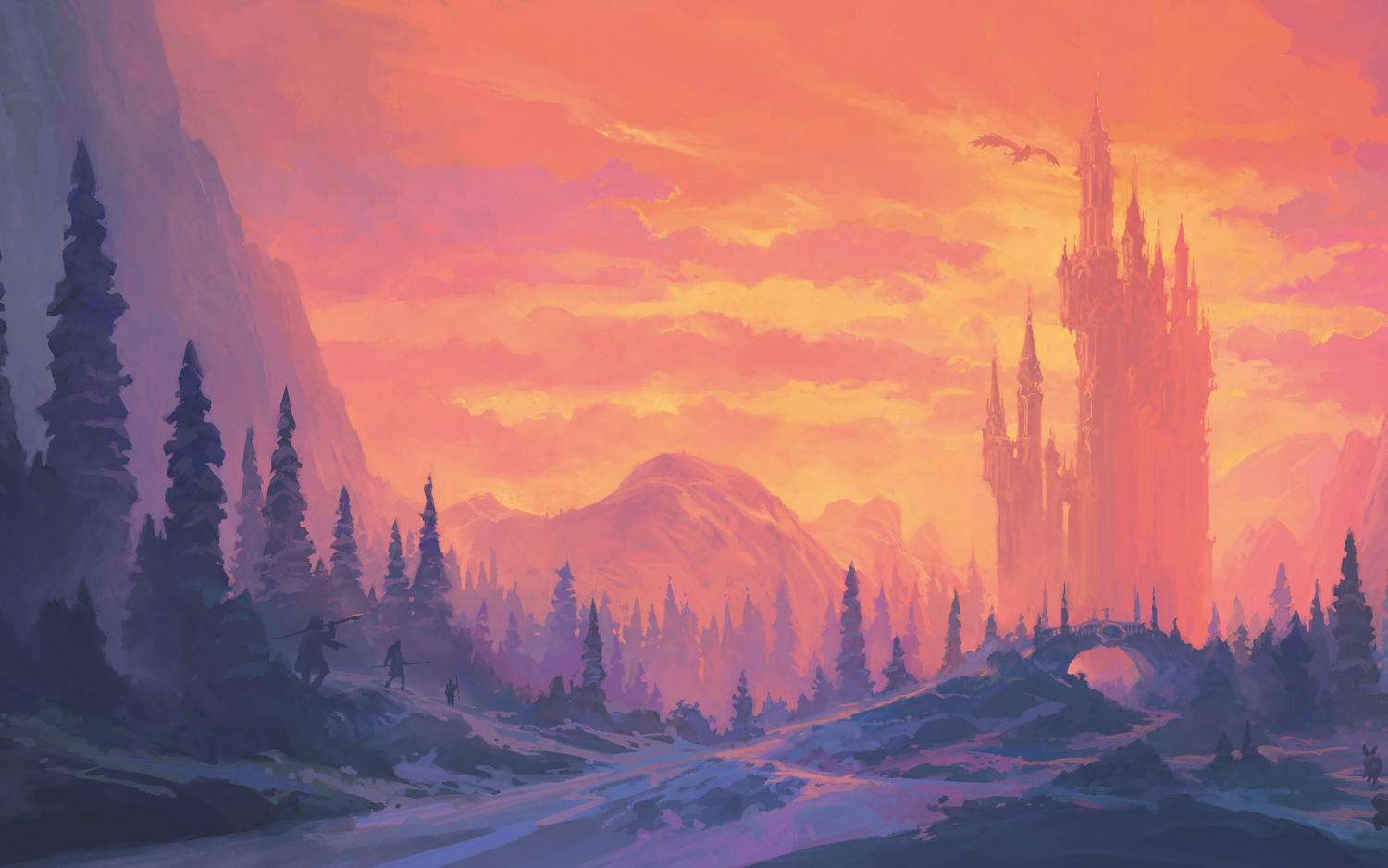
Example: The world of Seleth (NPLH p.10) is “a highly magical world shrouded in perpetual dusk and twilight.” That single sentence does a lot of work. It gives you mood, visuals, and even hints at the kinds of stories that belong there.
When you are building your own world, focus on clarity over detail. One strong idea will be more useful to you than five pages of lore.
2. Divine Pantheon
Next comes the question of the gods.
Are they present, distant, or gone? Do they influence daily life, or only appear in myths?
In our Seleth example, I’m going to add deities like Stellunae, god of suns, moons and stars (p.13) and the Veiled Knave, god of dreams (p.15), but their influence is only occasional.
This kind of choice shapes how your players (especially Clerics and Paladins) interact with the world. A setting where gods interact with their worshippers daily feels very different to one where they are distant and only communicate in vague omens or dreams. You don’t need a full pantheon, you could just have a single god, it’s up to you.

3. Cosmology and Planes
Think about whether other planes exist, how easy it is to travel between them, and how common rifts are (natural or magical openings that connect them).
In our example, I’m going to say that the Material Plane (where Seleth exists), Malstora and The Lostlands (p.20) are the major planes. Travel between them is deadly, and rifts are rare. These places exist, but they are not easy destinations to get to. The players might never visit them, but they might be referenced in old tomes they find.
When building your world, treat planes as background texture unless your campaign is going to involve dimension-hopping. A little lore goes a long way here.
4. The Major Nation
You only need one nation or country to start. Who rules it, what it is known for, and how it relates to its neighbours will naturally create conflict. Once you’ve got that down, you can move onto your campaign’s starting location.
Dolowroth (p.30), ruled by Emperor Lextrice Grasphall (p.33), tightly controls magic and is slowly corrupting its source. It sits on the east side of our world Seleth. Its neighbour, Bansheeran (p.29), is a dangerous nation shaped by the worship of dark demigods and fiends, creating a tense and unstable relationship between the two.

5. Starting Region
Here’s where you narrow your focus to where the story actually begins.
Define a single region of the major nation, including its terrain, notable sites, common creatures, and any influential factions. It also helps to think about travel conditions, and what the nearby areas around the region are known for.
In Dolowroth, I’m going to add the Dreadwood (p.48) a forested region that serves as a refuge for the enemies of the emperor, giving it clear narrative significance. Travel is dangerous, which emphasises the sense of risk. Notable sites like Fleetword Fort (p.200), the crumbling remains of a former civilisation, add history. And the nearby Lake Moondrop (p.57) is known as a source of increasingly scarce healing magic.
Together, these details shape how the world feels to explore and gives your players clear reasons to engage with it.
6. Starting Settlement
For the last part of your world build, create a place that feels lived in. It should be a central base that your players can use and explore at the start of the campaign.
A single settlement with a clear identity is all you need. Who lives there, what they do, and what problem they are facing will anchor your opening sessions.
To the west of Dolowroth, the Gossamer Spindle (p.106) is a village of drow elves built around weaving and silk production, led by Cybele Kallio (p.103). It has a tavern, The Verdant Vine (p.132), which is owned by Antimon Harpweather (p.139), giving the settlement a questing hub.
Nearby, Lake Moondrop (p.57) is a popular spot for people to visit and collect its increasingly scarce healing water. Abandoned neighbouring villages like Hollowfall (p.189) serve as dangerous reminders of what the creeping corruption affecting the region can do.
Together, these details make the settlement feel connected to the wider world, with clear reasons for players to explore, rest, and get into trouble.

7. First Session Quest Hook
Now your world is ready to be explored, it’s time to give your players something to do for session 1!
This is your chance to introduce the setting, the tone, and the kinds of challenges they can expect, all through a simple, focused objective. A good hook should feel connected to the world you’ve built, so your players have a reason to care from the very start.
For example: food and healing water are running low in the Gossamer Spindle and the party is sent to gather both from Lake Moondrop.
It is a simple hook, but one that ties directly into the scarcity of healing magic and the dangers of the surrounding area. Starting small like this gives your players a clear goal, while hinting at the bigger problems waiting to unfold.
 And there you have it, you’ve got what you need to get your homebrew campaign started! Just remember, you don’t need everything at once. A world isn't built in a single sitting, it will become richer every time you tinker with it, and every time your players interact with it.
If you start off with these layers, you'll have more than enough to run your first session, and a strong foundation to build on as your players start asking questions (including the ones you don’t expect). And that’s where homebrew really comes alive! Have fun.